When specifying a positive displacement pump for a new food processing line or a pharmaceutical formulation suite, the initial requirements list often reads similarly across projects: the pump must handle viscosities from water-thin to paste-like consistency, meet stringent clean-in-place requirements, transfer shear-sensitive emulsions without degradation, and manage soft solid particles without crushing. The challenge emerges when these requirements are met not by one pump technology alone, but by two that appear functionally similar on a preliminary specification sheet: the rotary lobe design and the sinusoidal rotor configuration.
Both technologies are established in hygienic processing. Both offer the volumetric consistency expected of a positive displacement pump. Both can be configured with the surface finishes, elastomer certifications, and cleanability characteristics required for food safety and pharmaceutical compliance. Yet their fundamental fluid handling mechanisms differ in ways that have direct consequences for product quality, cleaning cycle reliability, and operational cost over the pump's service life.
A methodical comparison of these two technologies, grounded in the physical principles that govern their interaction with process fluids, provides the engineering basis for a specification decision that aligns with the actual demands of the application rather than with habit or supplier availability.
How the Two Pump Mechanisms Differ
A rotary lobe pump operates by two synchronised rotors, each typically having two or three lobes, that rotate in opposite directions without touching. The synchronisation is maintained by external timing gears housed in a gearbox separated from the process side. As the lobes rotate, they create expanding cavities at the inlet that draw fluid in, and collapsing cavities at the outlet that displace fluid forward. The lobes never contact each other or the pump housing, instead relying on precise clearances to maintain volumetric efficiency.
A sinusoidal pump uses a single rotor with a waveform geometry that rotates within a similarly contoured liner. As the rotor turns, it creates a series of chambers that progress from the inlet to the outlet. The motion is a continuous, non-pulsating displacement in which the fluid is effectively "pushed" through the pump without the sudden volume changes that characterise lobe designs. The rotor and liner geometry can be designed so that there is effectively no trapped volume that must be relieved, and the gentle, continuous motion avoids the instantaneous pressure spikes that lobe pumps can generate as their lobe tips pass the discharge port.
These mechanical differences create distinct fluid handling characteristics. The lobe pump, with its discrete chamber volumes, generates a characteristic pulsation whose frequency is determined by the number of lobes and the rotational speed. The sinusoidal design produces a flow that is inherently low-pulsation, which reduces the need for pulsation dampeners in downstream instrumentation and filling operations.
Shear Sensitivity and Product Integrity
For products whose quality depends on maintaining delicate structures—protein-based emulsions, cultured dairy products with live microorganisms, pharmaceutical suspensions with precisely defined particle size distributions—the shear forces imposed by the pump during transfer can be a critical process parameter. Excessive shear can break emulsions, damage fragile particles, or reduce the viability of probiotic cultures.
Rotary lobe pumps, particularly those operating at higher speeds, generate shear forces in the clearance gap between the rotor tips and the housing. The fluid passing through this narrow gap experiences a velocity gradient that can be severe enough to damage shear-sensitive materials. The pulsating flow also contributes to fluctuating shear conditions that may not be captured in an average shear rate calculation.
The sinusoidal pump's continuous displacement mechanism subjects the fluid to significantly lower peak shear forces. Because no discrete lobes are sweeping past a discharge port and there are no tight inter-rotor clearances, the fluid experiences a more uniform velocity profile through the pump. This characteristic has led to the adoption of sinusoidal technology in applications where product integrity is the primary performance metric—for example, in the transfer of cultured yoghurt with active probiotic bacteria, or in the handling of cosmetic emulsions where phase separation would be immediately visible to the consumer.
The practical implication for specification is that the threshold for "shear-sensitive" may be lower than many process engineers assume. Products that are not obviously fragile—certain fruit preparations with whole fruit pieces, or sauces containing hydrated starch granules—can degrade noticeably when subjected to the pulsating shear of a lobe pump operating near its maximum speed. The sinusoidal alternative provides a wider operating window for maintaining product quality across varying production rates.
Particle Handling: From Whole Fruits to Suspended Solids
One of the common motivations for selecting a positive displacement pump over a centrifugal design is the need to convey fluids containing particulates without damaging them or allowing them to settle. Both lobe and sinusoidal pumps are capable of handling particulates, but their mechanisms have different tolerances and effects on the particles themselves.
Rotary lobe pumps can convey particles that fit within the lobe cavities. However, the clearance between the rotors and the housing—while small—can trap and crush particles that are larger than this gap. Additionally, the pulsating discharge can cause larger particles to accumulate temporarily at points of restriction, creating flow disturbances. For applications where particle integrity is less critical—such as conveying vegetable pieces that will be further processed—this level of handling is often acceptable.
The sinusoidal pump's single-rotor design provides a more open flow path with fewer points of mechanical restriction. Soft solids and particulates can pass through the pump without experiencing the shear and compression that characterise multi-lobe rotor interactions. This makes sinusoidal designs particularly relevant for applications such as transferring whole strawberries in a yoghurt mix, or moving pharmaceutical gel caps suspended in a carrier fluid, where product appearance and structural integrity at the point of final packaging are quality-critical attributes.
CIP Performance and Hygienic Design Validation
The cleanability of a pump directly affects production efficiency in multi-product facilities. Between batches, the cleaning cycle must reliably remove all product residues from the pump interior to prevent cross-contamination and microbial growth. Both rotary lobe and sinusoidal pumps are designed with CIP in mind, but their internal geometries present different cleaning challenges.
Rotary lobe pumps typically require the rotors to be removed for thorough manual cleaning if the product has any tendency to accumulate in crevices. The area behind the rotor, around the shaft seal, and within the timing gear housing represent zones where cleaning solutions may have limited access during automated CIP cycles. Pumps used in applications with frequent product changeovers often require significant disassembly and reassembly, increasing maintenance labour and the risk of improper reassembly.
Sinusoidal pump designs, by virtue of having fewer internal components and a simpler flow path, generally offer more effective CIP performance with less manual intervention. The single rotor and smooth liner present fewer dead zones where product can accumulate, and the design inherently avoids the crevices at the rotor-housing interface that characterise multi-rotor designs. This simplification can translate to shorter cleaning cycles and reduced water and chemical consumption.
The practical difference is measured in the time required to achieve a validated clean. A pump that can be reliably cleaned without disassembly between compatible products supports more production runs in a given time window. For a facility running three or four product changeovers per week, the accumulated time savings over a year can significantly affect overall equipment effectiveness.
Maintenance Complexity and Service Life Cost
The long-term cost of operating a hygienic pump is determined not only by the initial purchase price, but by the frequency and complexity of maintenance interventions, the cost of replacement parts, and the downtime associated with those activities. A pump with a lower acquisition cost may prove more expensive over a five-year service life if it requires more frequent seal replacements or rotor adjustments.
Rotary lobe pumps have wear components that include the rotor lobes, the housing liner, the shaft seals, and the timing gears. The timing gears require periodic oil changes and inspection. Any play that develops in the gear train can allow the rotors to contact each other, causing rapid damage that may require complete rotor replacement. The clearance between rotors and housing must be monitored and adjusted to maintain volumetric efficiency as wear progresses.
The sinusoidal pump simplifies this maintenance picture considerably. With only one rotor and no timing gears—the rotor is centred by the liner geometry itself—there are fewer wear components and fewer adjustments to track. The absence of inter-rotor clearances eliminates the risk of rotor-to-rotor contact damage. The shaft seal remains a maintenance item, but the overall maintenance burden is typically lower than that of a comparably sized rotary lobe pump.
The following comparison table summarises the key differentiating factors across the dimensions most relevant to hygienic process applications.
| Comparison Dimension |
Rotary Lobe Pump |
Sinusoidal Pump |
| Flow Pulsation |
Moderate to high; requires dampeners for sensitive instrumentation or filling. |
Very low; inherently smooth displacement suitable for direct filling applications. |
| Peak Shear Forces |
Localised high shear in rotor-housing clearances; potential for emulsion or particle damage. |
Low and uniform; minimal product degradation even for shear-sensitive materials. |
| Particle Handling |
Adequate for particles smaller than lobe clearance; risk of crushing at clearance points. |
Gentle handling of soft solids and particulates through open flow path. |
| CIP Effectiveness |
May require rotor removal for validated cleaning; dead zones behind rotors and at shaft seals. |
Simpler internal geometry; fewer dead zones; generally more effective automated cleaning. |
| Maintenance Points |
Timing gears, rotor clearances, shaft seals, housing liners; multiple adjustment points. |
Single shaft seal and liner; fewer wear components and adjustment requirements. |
| Purchase Cost |
Typically lower initial capital cost for equivalent capacity. |
May carry a higher initial cost, offset by reduced maintenance and cleaning downtime. |
| Typical Application Fit |
General hygienic transfer; less shear-sensitive products; operations with established maintenance programs. |
Shear-sensitive emulsions; products with delicate particulates; multi-product facilities with frequent changeovers. |
Making the Selection: When Each Technology Excels
The choice between these two technologies becomes clearer when the selection criteria are prioritised according to the specific application rather than evaluated in the abstract. Certain process conditions strongly favour one technology over the other.
A rotary lobe pump is often the appropriate choice when the product is relatively robust—for example, a processed sauce that will undergo further heat treatment, or a dairy ingredient that is not cultured or otherwise shear-sensitive. If the facility already operates multiple rotary lobe pumps and the maintenance team is trained and equipped for their upkeep, the lower initial capital cost and familiarity with the technology may make it the practical preference. The key is verifying that the product truly tolerates the shear conditions without quality degradation over the full range of production flow rates.
A sinusoidal design becomes the preferred option when product integrity is non-negotiable. This includes products where shear damage would be immediately noticeable to the consumer—such as a premium yoghurt with whole fruit pieces—and products where the damage may not be visible but affects functionality or shelf life, such as an emulsion whose particle size distribution must remain within a narrow specification. The reduced pulsation also benefits filling operations where precise volumetric control improves fill accuracy and reduces product giveaway.
For facilities processing multiple products with widely varying rheological properties, the operational flexibility of the sinusoidal pump's gentle handling profile across a broad viscosity range provides an additional margin of safety. A single pump technology that reliably handles both the water-thin buffer solution and the high-viscosity product concentrate reduces the number of different pump types in the plant and simplifies spare parts inventory.
Beyond the Pump: System-Level Considerations
The pump does not operate in isolation. The selection decision affects and is affected by the broader process system, including piping design, valve placement, instrumentation, and the control strategy. A pump that generates significant pulsation may require pulsation dampeners and more robust pipe supports to manage vibration. A pump that requires frequent disassembly for cleaning may dictate more generous clearances around the installation point, consuming valuable floor space in a cleanroom environment.
The pump's compatibility with the plant's CIP infrastructure also deserves attention. A pump that can be cleaned effectively in place, without manual intervention, allows the CIP sequence to run unattended during the overnight cleaning window. This maximises the production time available during working hours and reduces the labour cost associated with manual cleaning and inspection.
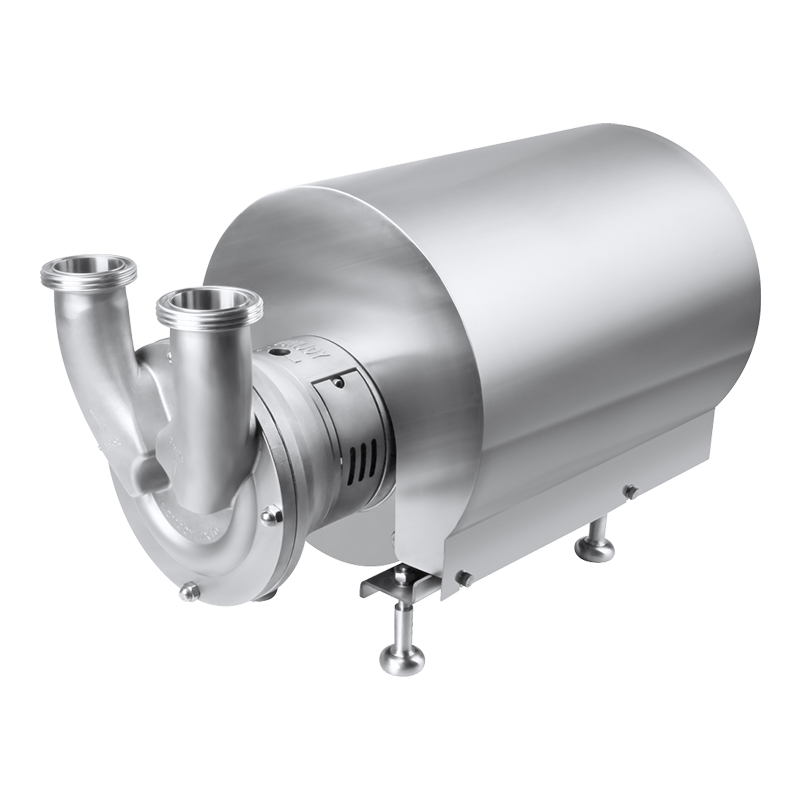
For teams evaluating these system-level impacts, reviewing the specific configuration options and CIP validation data for different sanitary pump options can clarify which technology aligns best with the existing or planned infrastructure. The pump specification is never made in a vacuum; it is part of a larger hygienic process design that must function as an integrated whole.
A Framework for Decision-Making
A structured approach to the comparison avoids the common pitfall of defaulting to the most familiar technology. The following framework breaks down the decision into sequential questions that guide the specification toward the appropriate technology.
First, define the product's shear sensitivity with data rather than assumptions. If the product contains cultured organisms, emulsions, or fragile particulates, conduct a small-scale shear test—or review published shear stability data—to establish the acceptable shear exposure during transfer.
Second, quantify the CIP requirements. If the pump must be cleaned between every batch and the cleaning cycle time is a production constraint, the cleanability of the pump becomes a primary selection criterion rather than a secondary consideration. In such cases, the simpler internal geometry that supports more effective automated cleaning carries significant operational value.
Third, assess the maintenance infrastructure. If the facility has a well-established maintenance program with trained technicians and a spare parts inventory for rotary lobe pumps, the organisational cost of introducing a different technology should be weighed against the product quality and cleaning efficiency benefits. In a greenfield project, this legacy consideration is absent, and the selection can be based purely on the technical merits.
Finally, evaluate the total cost of ownership rather than the purchase price. The lower maintenance burden, shorter cleaning times, and reduced product waste from quality-related rejections can justify a higher initial investment over the pump's service life. For operations where product value is high—pharmaceutical formulations, premium food products—the cost of even occasional batch rejections far exceeds any difference in pump capital cost.
For those in the process of specifying new hygienic transfer equipment, examining a range of positive displacement pump configurations with detailed performance data can bring clarity to the technical comparison and support a decision grounded in the actual requirements of the application.
The Path to a Validated Selection
A pump specification made early in the process design phase, with input from engineering, quality, and maintenance stakeholders, is more likely to result in a selection that performs well across the full equipment lifecycle. The comparison between rotary lobe and sinusoidal technologies illustrates a broader principle in hygienic process specification: the best choice is rarely universal, but emerges from a clear understanding of what the process demands and what each technology offers in response.
Defining those demands in measurable terms—acceptable shear levels, maximum cleaning time, allowable pulsation amplitude—transforms the selection from a preference into a verifiable engineering decision. The technologies exist to serve the process, not the other way around. When the process requirements are clearly defined, and the pump characteristics are accurately understood, the right selection becomes apparent.
For engineering teams ready to move from specification comparison, reviewing detailed technical documentation for available hygienic transfer pump models provides the dimensional, material, and performance data necessary to complete the equipment specification with confidence.
Disclaimer
The technical comparison provided in this article is based on general engineering principles and publicly available information regarding rotary lobe and sinusoidal pump technologies for hygienic applications. It is intended for informational purposes only and does not constitute professional engineering advice. Process conditions, product characteristics, and facility requirements vary significantly between installations. Always consult equipment manufacturers for performance data specific to your application, and validate pump selection through appropriate testing under actual or simulated process conditions. The author and publisher disclaim any liability for equipment damage, production loss, or safety incidents arising from the application of the information contained herein.

 CN
CN EN
EN ES
ES RU
RU