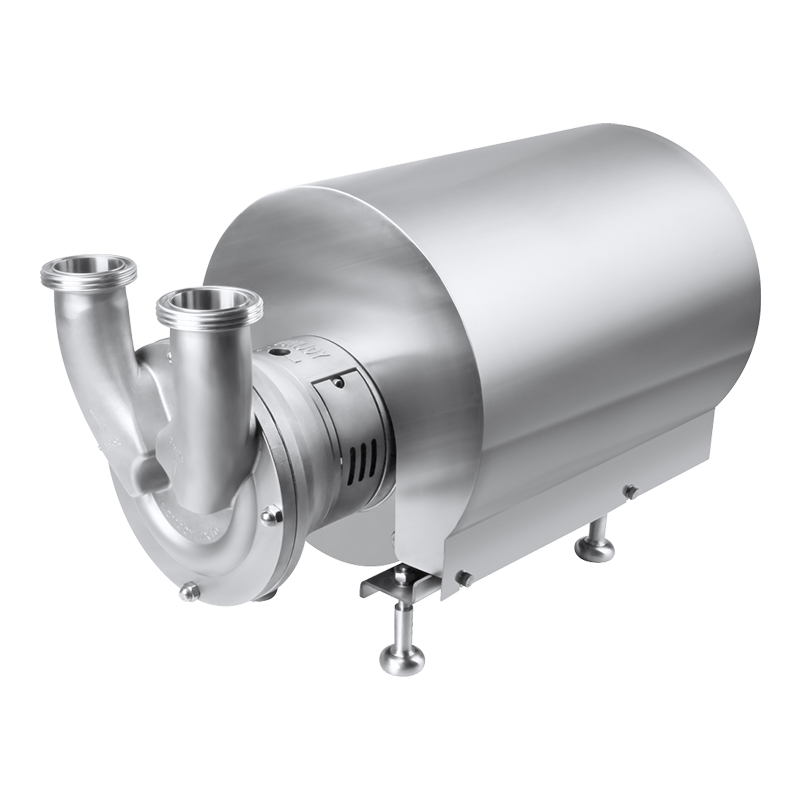
In food, beverage, and pharmaceutical production environments, positive displacement pumps are subjected to demanding operational cycles: frequent product changeovers, aggressive clean-in-place (CIP) chemistry, hot water rinses reaching 90°C, and fluids that range from water-thin to highly viscous pastes. Over time, maintenance teams observe a pattern: pump performance degradation rarely happens catastrophically. Instead, it shows up as a gradual loss of flow rate, a slight increase in power draw, or product quality issues traced back to inconsistent discharge pressure.
The root cause of these gradual failures often lies not in the pump design, but in the maintenance approach. A reactive maintenance strategy—servicing equipment only when performance drops below a threshold—leads to accumulated wear on critical rotating components. A preventive and predictive approach, built around understanding the specific mechanical interactions inside the pump, can significantly extend the operational life of hygienic processing equipment. The key lies in understanding where wear occurs, how to detect it early, and which maintenance actions actually prevent degradation rather than simply documenting it.
Understanding the Wear Zones in Positive Displacement Pumps
To build an effective maintenance plan, it helps to first identify where wear naturally concentrates. In a rotary positive displacement design that uses intermeshing rotors, the primary wear zones are predictable based on the physics of operation.
The first zone is the rotor-to-rotor interface. Even though the rotors do not touch during normal operation—they are synchronised by timing gears—any play that develops in the gear train or bearings can allow the rotor profiles to make contact. This contact creates surface damage that degrades the close clearance needed for volumetric efficiency. Once the rotor surface finish is compromised, the pump slips more internally, requiring a higher speed to achieve the same flow rate.
The second zone is the rotor-to-liner or rotor-to-housing clearance. In hygienic designs, the pump housing and rotors are manufactured to tight tolerances, often with surface finishes below Ra 0.8 μm. These smooth surfaces minimise product adherence and facilitate CIP cleaning. However, abrasive products or inadequate flushing after CIP cycles can cause erosion or corrosion that opens up these clearances, reducing efficiency and creating micro-crevices where product residue can accumulate.
The third zone involves the mechanical seal or shaft seal assembly. This is the barrier between the process fluid and the atmosphere—and the gearbox lubrication system. A mechanical seal consists of two precisely lapped flat faces, one rotating with the shaft and one stationary in the seal housing. These faces are separated by a fluid film measured in microns. Any condition that disrupts this film—cavitation, dry running, thermal shock from a cold water flush after a hot CIP cycle, or abrasive particles—will cause the seal faces to contact and wear rapidly.
Mechanical Seal Care: The Most Common Failure Point
Industry data consistently shows that mechanical seal failure is the leading cause of unscheduled pump downtime in process plants. The Hydraulic Institute reports that up to 70% of pump failures involve the mechanical seal in some capacity. For hygienic applications, the consequences extend beyond downtime: a leaking seal introduces a contamination pathway that can compromise a production batch.
Several operating conditions are known to drastically shorten mechanical seal life. Dry running is perhaps the most damaging, as it removes the fluid film that lubricates and cools the seal faces. Even a few seconds of dry operation can generate enough heat to crack the seal face. In CIP systems, ensuring the pump is adequately primed before starting—and that CIP supply pumps are sequenced correctly—prevents this scenario.
Thermal shock occurs when the seal assembly experiences a rapid temperature change. Consider a pump that has just completed a hot caustic CIP cycle at 80°C. If it is immediately flushed with ambient water for product changeover, the rapid contraction can cause the seal faces to distort or crack. A controlled cool-down phase, or a gradual temperature ramp incorporated into the CIP sequence, allows the seal materials to acclimate at a rate that maintains dimensional stability.
Seal flush plans, as defined by industry standards such as ISO 5199 and API 682 for process pumps, specify how the seal environment is managed. In hygienic applications, a single mechanical seal with a quench or flush is common. The flush fluid—often water or a compatible buffer—keeps the seal faces cool and prevents product from crystallising at the seal interface. Maintaining the correct flush pressure and flow rate is essential. Too little flush flow results in inadequate cooling; too much pressure can force flush fluid across the seal and into the product stream.
Routine inspection of the seal assembly should include checking for signs of leakage at the atmospheric side of the seal housing, monitoring flush fluid consumption if a flow meter is installed, and examining the seal faces for scoring or pitting when the pump is disassembled during scheduled maintenance. Replacing seal components at intervals recommended by the manufacturer, rather than waiting for visible leakage, is a low-cost strategy that often prevents far more expensive repairs.
Rotor and Clearance Maintenance: Protecting Volumetric Efficiency
The internal clearances of a rotary positive displacement pump determine its ability to generate flow against pressure. As clearances increase due to wear, the pump slips more, meaning a larger portion of the fluid recirculates internally rather than being discharged. This slippage is not always immediately obvious—the pump may still run and produce flow—but the loss of efficiency shows up in higher motor current draw, longer batch transfer times, and reduced suction capability.
Abrasive wear is the primary mechanism that opens up these clearances. Products containing undissolved sugar crystals, spice particulates, or mineral-based ingredients act as a lapping compound, gradually polishing away material from the rotor tips and housing bore. The rate of wear depends on the particle hardness, concentration, and the pump speed. Higher speeds increase the velocity of particles across the clearance gap, accelerating erosion.
One method to track rotor and housing wear is to periodically measure the pump's slip rate. This involves operating the pump at a known speed against a closed discharge valve with a recirculation line open, and measuring the flow at a defined pressure. Comparing this reading to the baseline performance recorded when the pump was new—or after a rotor replacement—provides a quantitative measure of internal clearance condition. A trend of increasing slip over successive measurements indicates progressive wear.
When wear is detected early, the maintenance response can be less invasive. Some pump designs allow for clearance adjustment by shimming the rotor housing or replacing wear plates. If the wear has progressed too far, rotor replacement or re-coating may be necessary. Keeping a record of clearance measurements and the hours of operation between adjustments helps develop a data-driven replacement schedule that avoids both premature part replacement and unexpected failures.
The timing gears that synchronise the rotors also require attention. These gears are typically oil-lubricated and isolated from the process side by shaft seals. Regular oil changes—following the manufacturer's specified interval—remove wear particles and prevent the acidic oil conditions that accelerate gear tooth pitting. Inspecting the gear teeth for spalling or abnormal wear patterns during oil changes can provide early warning of bearing issues or misalignment in the gear train.
CIP and SIP: Maintaining the Pump During Cleaning, Not Just Production
In hygienic facilities, a significant portion of the pump's operational hours is spent not processing product, but undergoing cleaning and sterilisation. The conditions during CIP and SIP cycles are often more aggressive than those during normal production. Caustic cleaning solutions at elevated temperatures attack elastomeric seals and gaskets. Acidic rinse cycles can cause pitting corrosion on stainless steel surfaces if the chemistry is not adequately rinsed.
O-rings and gaskets in the pump assembly should be inspected on a schedule that reflects the CIP cycle frequency. Materials such as EPDM, FKM, and FFKM each have different resistance profiles to CIP chemicals and steam. An EPDM O-ring that performs well in hot water may degrade rapidly when exposed to certain acid-based sanitisers. Matching the elastomer to the cleaning chemistry is a one-time selection decision, but regular inspection verifies that the material continues to perform as expected.
After a CIP cycle concludes, any remaining cleaning solution must be completely drained from the pump housing. Pooled chemicals can continue to attack surfaces and seals even at ambient temperature. Installing the pump at a slight inclination toward the drain port, if the pump design permits, facilitates complete drainage. If the pump orientation cannot be changed, manual inspection of the interior after CIP—using a borescope if necessary—can verify that no residual liquid remains.
Steam-in-place cycles introduce another set of considerations. The rapid temperature increase from ambient to steam saturation temperature causes thermal expansion of both the rotating and stationary components. Because rotors, housing, and shaft materials may expand at different rates, the clearances that exist at ambient temperature change during SIP. A pump that operates with adequate clearance during production may experience momentary contact during the heat-up phase of SIP if the thermal expansion characteristics of the materials were not accounted for in the initial clearance specification.
For teams evaluating whether their current cleaning and maintenance practices align with the mechanical requirements of their equipment, reviewing the specific maintenance documentation provided with various sanitary pump options can clarify recommended inspection intervals and spare parts planning.
Building a Practical Maintenance Schedule
A maintenance schedule that extends pump life without creating unnecessary work balances three factors: operational hours, product characteristics, and condition monitoring data. The following table provides a general framework for organising maintenance tasks by interval. Actual intervals should be adjusted based on the specific operating environment.
| Maintenance Activity |
Suggested Interval |
Key Indicators |
Notes |
| Seal flush system check |
Weekly |
Flush pressure, flow rate, fluid level (if applicable) |
Detect blocked lines or low flush fluid before seal damage occurs. |
| Oil level and condition check |
Monthly |
Oil colour, clarity, and presence of water contamination |
Milky oil indicates water ingress and requires immediate investigation. |
| Slip rate measurement |
Quarterly |
Flow rate at known speed and pressure, compared to baseline |
Track trend over time; increasing slip indicates progressive clearance wear. |
| O-ring and gasket inspection |
Quarterly or every 50 CIP cycles |
Cracking, swelling, permanent compression set |
Elastomer degradation is accelerated by CIP chemistry; replace preventively. |
| Rotor and housing visual inspection |
Annually or every 2,000 operating hours |
Scoring, pitting, and erosion patterns on rotor tips |
Use a borescope for preliminary inspection without full disassembly if access ports allow. |
| Mechanical seal replacement |
Per manufacturer recommendation or based on slip rate trend |
Visible leakage, increasing flush consumption, face wear |
Preventive replacement is often lower cost than emergency repair. |
| Timing gear inspection and oil change |
Annually |
Gear tooth condition, oil analysis results |
Detect alignment or bearing issues early through gear wear pattern analysis. |
Preventive vs. Predictive: The Role of Condition Monitoring
Traditional preventive maintenance uses fixed time intervals for part replacement and inspection. While this approach is simple to administer, it can result in replacing components that still have useful life. Predictive maintenance, enabled by condition monitoring, uses real-time data to determine when maintenance is actually needed.
For positive displacement pumps in hygienic service, several condition monitoring technologies are practical. Vibration analysis using accelerometers mounted on the pump housing can detect changes in the vibration signature that indicate bearing degradation, rotor contact, or cavitation. A baseline vibration measurement taken after installation provides a reference against which future readings can be compared.
Motor current signature analysis uses the electrical current drawn by the pump motor to infer the mechanical load. As internal clearances increase and efficiency decreases, the pump may actually draw less current because less work is being done on the fluid—but this depends on the control strategy. In constant-speed applications, current tends to drop as efficiency falls. In variable-speed applications where the drive adjusts speed to maintain a flow rate, current may increase as speed increases to compensate for slipping.
Temperature monitoring at the seal housing can also provide early warning. A seal that is beginning to fail will typically run hotter than a healthy seal due to increased friction between the seal faces. A trending temperature increase, even before visible leakage appears, can trigger a planned seal replacement during a scheduled downtime window rather than an emergency repair during production.
For operations seeking to implement a predictive program, selecting equipment that supports the integration of these monitoring technologies is an important consideration early in the procurement process. Exploring the instrumentation and control compatibility of available positive displacement pump configurations can help build a maintenance strategy that is both proactive and data-driven.
The Cost of Neglect vs. the Value of a Planned Approach
Pump maintenance is often treated as a necessary expense to be minimised. Yet the financial comparison between a planned maintenance program and a reactive approach consistently favours the former. Unplanned downtime in a food or pharmaceutical plant carries costs that extend far beyond the price of a replacement seal or rotor: lost production capacity, product that must be quarantined or discarded, quality investigations, and the operational disruption of re-sterilising a process line.
A maintenance program built around understanding wear mechanisms, monitoring equipment condition, and replacing components before catastrophic failure occurs is not about spending more on maintenance. It is about spending maintenance resources on scheduled activities during planned downtime, rather than on emergency repairs that disrupt production and create regulatory risk.
Building this program starts with knowing the specific maintenance requirements and service life expectations of the equipment installed in the process line. For teams evaluating long-term operational costs, reviewing detailed maintenance guidelines and spare parts availability for the specific pump models under consideration ensures that the maintenance strategy and the equipment are aligned from the outset.
Disclaimer
The maintenance guidance provided in this article is based on general engineering principles and industry-recognised practices for rotary positive displacement pumps in hygienic service. It is intended for informational purposes only and does not constitute professional engineering advice. Equipment specifications, operating conditions, process fluids, and cleaning chemistries vary significantly between installations. Always consult the equipment manufacturer's official documentation, including installation and maintenance manuals, for model-specific procedures, torque values, clearance specifications, and spare part numbers. Maintenance intervals should be validated based on actual operating data, regulatory requirements, and site-specific risk assessments. The author and publisher disclaim any liability for equipment damage, production loss, or safety incidents arising from the application of the information contained herein.

 CN
CN EN
EN ES
ES RU
RU