A twin screw pump that is undersized for a process line will run at the upper limit of its speed range, generate excessive shear, and wear its screws and housing ahead of schedule. One that is oversized will operate at a fraction of its design capacity, waste energy, and occupy unnecessary floor space. Getting the size right is a matter of working through a small set of process parameters and matching them to the pump's published performance curves. The process is repeatable and does not require specialised software, but it does require a clear definition of what the pump is being asked to do.
1. Define the Required Flow Rate
The starting point for sizing any pump is the volumetric flow rate the process demands. For a continuous transfer operation – such as moving product from a mixing tank to a filling machine – the flow rate is determined by the downstream equipment's throughput. For a batch transfer, the required flow is calculated from the batch volume and the acceptable transfer time.
In hygienic applications, flow rates are typically expressed in litres per hour or cubic metres per hour. The pump's rated capacity should be slightly above the maximum required flow to provide a margin for process variations, but not so much that the pump routinely operates below 30% of its rated capacity. Running a twin screw pump at very low speeds relative to its design point reduces volumetric efficiency because the internal clearances allow a larger fraction of the fluid to slip back from the discharge to the suction side.
2. Determine the Differential Pressure
The pump must generate enough pressure to overcome the system resistance: the static head from the liquid level in the source and destination tanks, the friction losses in the piping, and the pressure required by any downstream equipment such as filters, heat exchangers, or filling nozzles. The total pressure the pump must develop is the difference between the discharge pressure and the suction pressure.
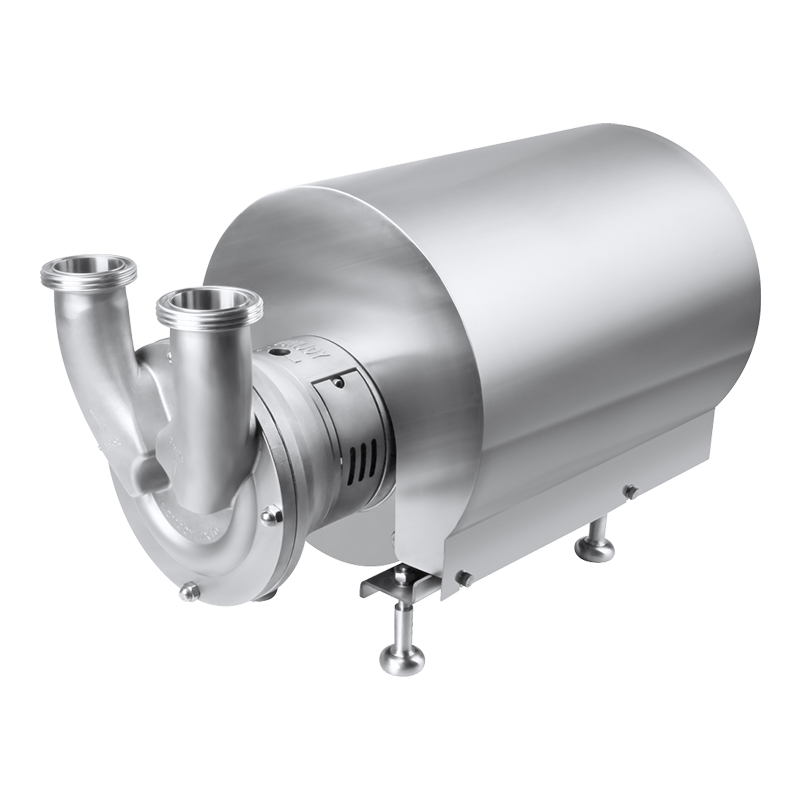
A twin screw pump is a positive displacement machine, meaning it delivers a nearly constant flow against varying pressure, within the limits of the motor power and the internal clearances. The sizing task is to ensure that the pump can deliver the required flow against the maximum expected differential pressure without exceeding the motor's rated power and without dropping below an acceptable volumetric efficiency. A Sanitary Double Screw Pump with a double-head design provides higher flow and pressure capability than a single-head configuration, making it suitable for processes that combine moderate to high flow with significant system back‑pressure.
3. Account for Viscosity
Viscosity has a first‑order effect on a screw pump's performance. As viscosity increases, the internal slip flow decreases, and the volumetric efficiency improves – but the torque required to turn the screws also rises. The pump's power requirement must be calculated at the maximum viscosity the process will see, which often occurs during cold start‑up or when a product has cooled in the line.
Conversely, when a pump is cleaned in place with hot water or CIP solution, the viscosity drops dramatically, and the pump must be able to handle the resulting low‑viscosity flow without cavitation. A twin screw pump is well-suited to this wide viscosity range because the screws do not rely on the pumped fluid for lubrication and can handle both high‑viscosity products and low‑viscosity cleaning media without damage.
4. Evaluate the Presence of Solids or Soft Particles
A twin screw pump can handle soft solids and particles without the damage that a lobe or gear pump might cause because the intermeshing screws do not contact each other. If the product contains fruit pieces, vegetable chunks, or similar soft particulates, the screw geometry and the clearance between the screws must be sufficient to pass the largest expected particle without crushing or bridging. The manufacturer specifies the maximum particle size for each pump model, and this should be checked against the process requirement.
For abrasive slurries, the screw and housing materials must be selected for wear resistance. The standard material for hygienic twin screw pumps is 316L stainless steel for wetted parts, with various surface finish options to meet ASME BPE or 3A standards.
5. Consider CIP and Sterility Requirements
In a hygienic process, the pump must be cleanable in place without disassembly. Twin screw pumps are inherently CIP‑able because the rotating screws create a sweeping flow through the pump chamber, and the double‑head design can be configured for bidirectional operation, allowing cleaning solutions to be circulated through the pump in both directions. The mechanical seal must be selected for the CIP temperature and chemical exposure; a double mechanical seal with a sterile barrier fluid is common in aseptic applications. For operations that require these cleaning capabilities, Donjoy S‑LG series pumps are designed with full CIP/SIP compatibility and a selection of single and double mechanical seals to match the sterility requirements.
6. Motor and Speed Range
Twin screw pumps are typically driven by an electric motor through a gear reducer or directly via a variable‑frequency drive. The operating speed range is a key sizing parameter. The pump must be able to deliver the required flow at a speed that is within the manufacturer's recommended range – neither too slow for efficient operation nor too fast for the mechanical seal and bearing life.
A variable‑speed drive is recommended for processes where the flow rate or product viscosity varies. Running the pump at a lower speed for high‑viscosity products reduces shear and protects the product structure, while a higher speed can be used for CIP cycles.
Selection Checklist
-
Maximum required flow rate with a reasonable margin
-
The maximum differential pressure the system will impose
-
Product viscosity ranges from start‑up to CIP
-
Maximum particle size in the product
-
CIP/SIP temperature and chemical compatibility
-
Mechanical seal type for the sterility requirement
By working through these parameters and comparing them against the pump manufacturer's performance curves, a process engineer can arrive at a correctly sized pump that will operate reliably across the full range of process and cleaning conditions. For technical data sheets and performance curves, Donjoy's twin screw pump documentation provides the detailed specifications needed to complete the selection.
A correctly sized twin screw pump is an asset that runs quietly, handles product gently, and requires minimal maintenance. The time spent on the sizing exercise before ordering is a small investment that pays back in years of trouble‑free operation.

 CN
CN EN
EN ES
ES RU
RU